Dongdaemun Design Plaza
เมื่อสถาปัตยกรรมไม่ได้ตั้งอยู่บนผืนดิน แต่กลายเป็นผืนดินเสียเอง
มีอาคารบางแห่งที่เราไม่ได้ “เดินเข้าไป” แต่เราเดิน “ผ่านมัน”
เดิน “ขึ้นมัน” และค่อย ๆ รู้ตัวอีกทีว่า เรากำลังอยู่ข้างใน แนวคิดของมันไปแล้ว
Dongdaemun Design Plaza หรือ DDP ในกรุงโซล เป็นหนึ่งในงานสถาปัตยกรรมแบบนั้น
ออกแบบโดย Zaha Hadid Architects ร่วมกับ Samoo Architects & Engineers และเปิดใช้งานในปี 2014 บนอาณาบริเวณเดิมของพื้นที่ประวัติศาสตร์และสนามกีฬาเก่าในย่าน Dongdaemun ซึ่งเป็นย่านที่เต็มไปด้วยพลังของการค้า แฟชั่น วัฒนธรรม และจังหวะเมืองที่ไม่เคยหยุดนิ่ง
สิ่งที่ทำให้ DDP ไม่เหมือนอาคารสาธารณะทั่วไป คือมันไม่ได้ถูกออกแบบให้เป็นเพียง “อาคาร” แต่ถูกวางให้เป็น landscape of movement หรือภูมิทัศน์ที่ผู้คนสามารถเดินผ่าน รับรู้ และใช้ชีวิตร่วมกันได้ตลอดเวลา แนวคิดของโครงการที่ถูกพูดถึงเสมอคือ Metonymic Landscape ซึ่งพยายามแปลพลังของเมือง Dongdaemun ออกมาเป็นพื้นที่ที่ไหลต่อเนื่องกันระหว่างอาคาร สวน พลาซ่า และทางสัญจร
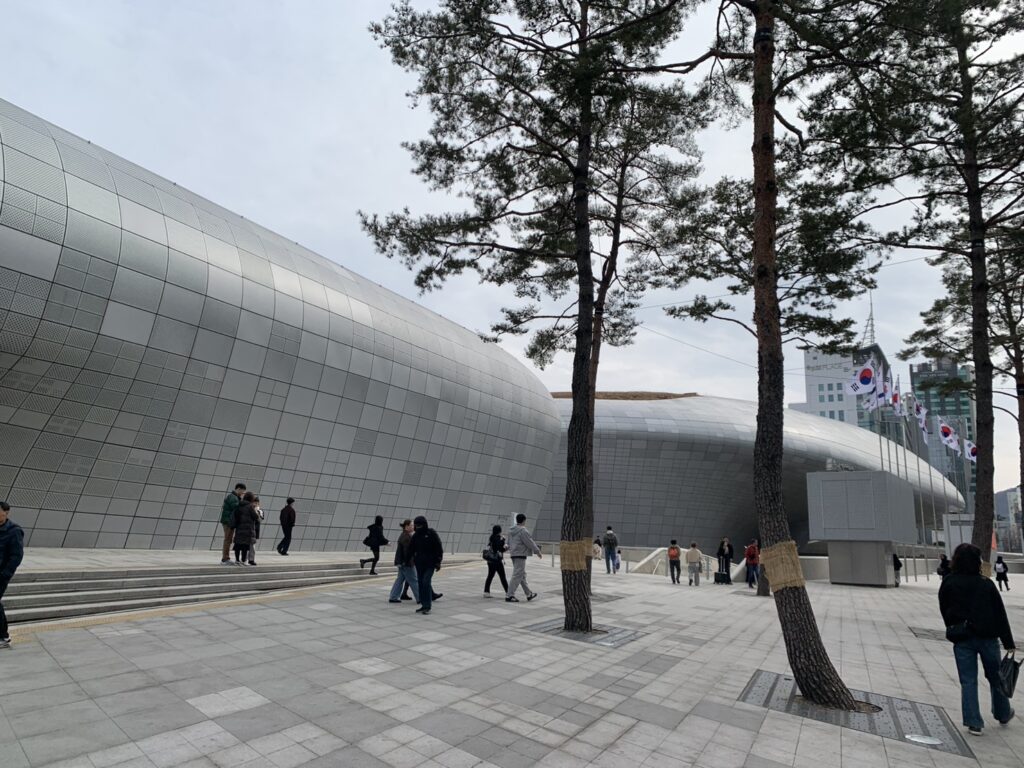
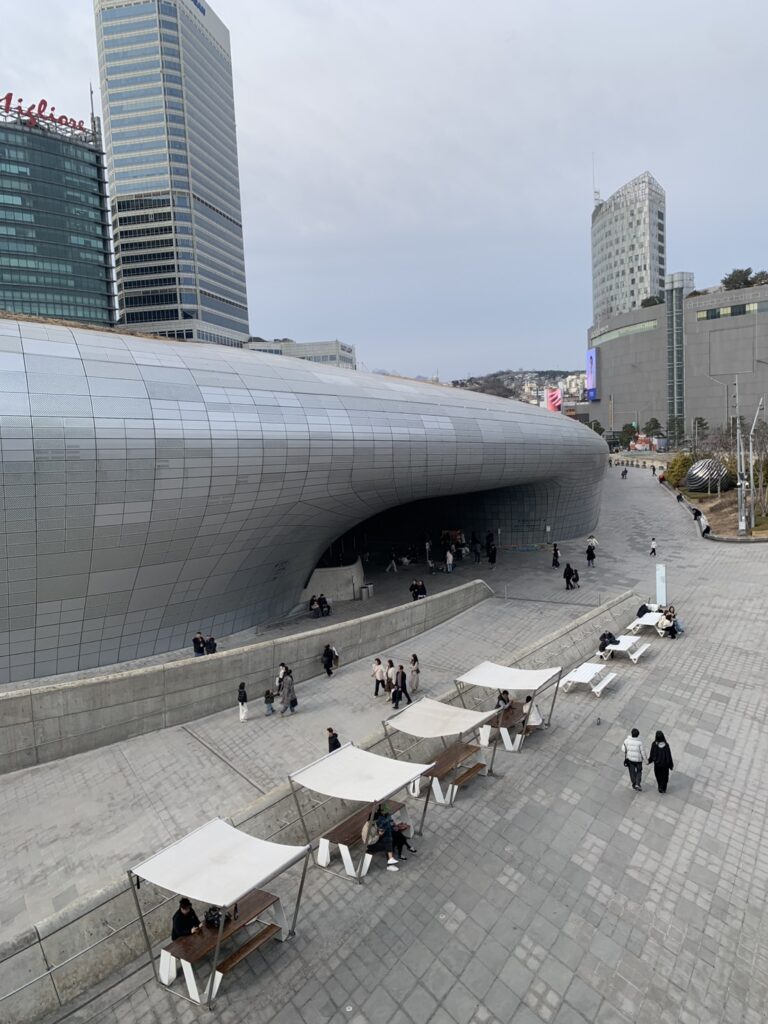
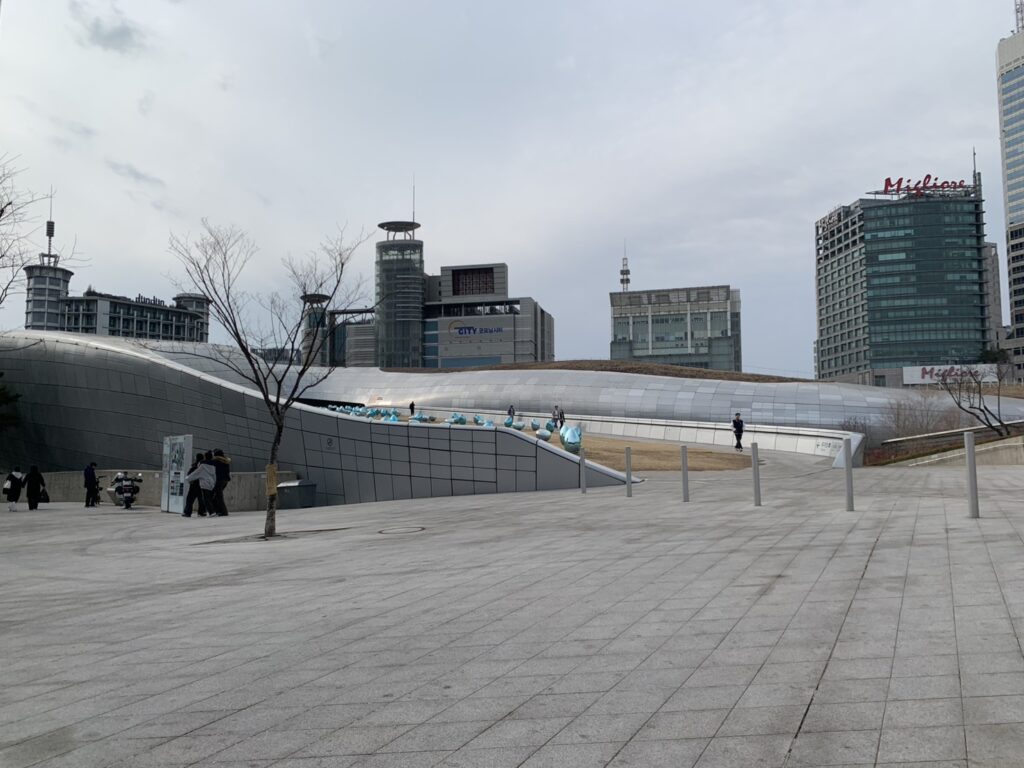
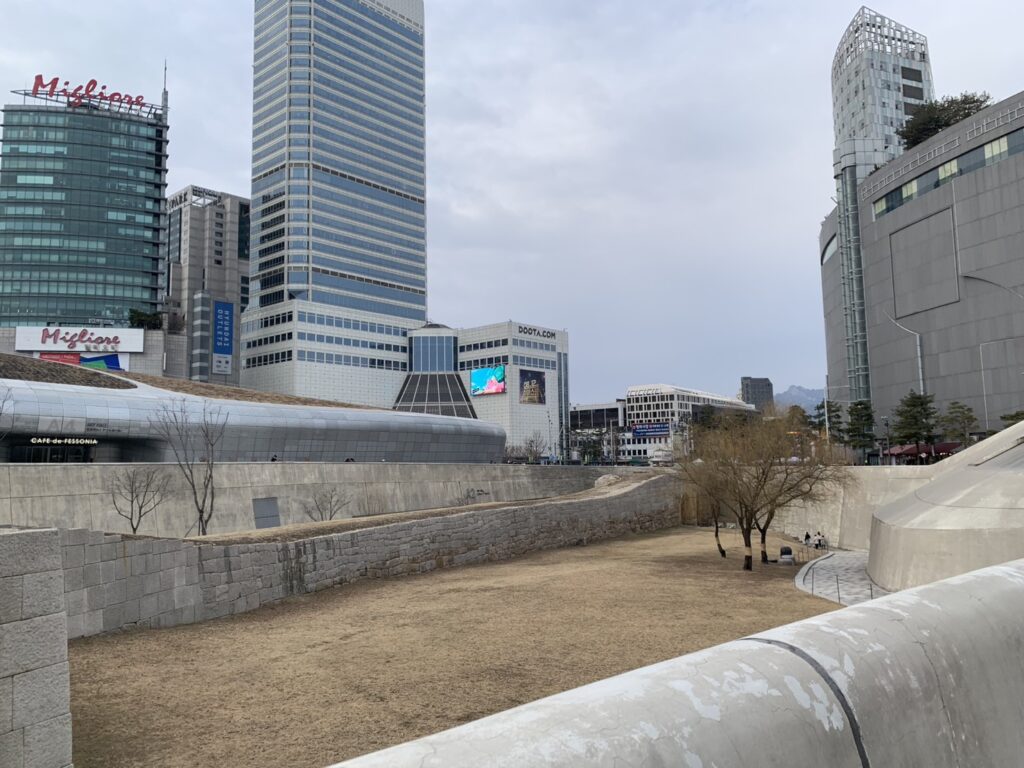
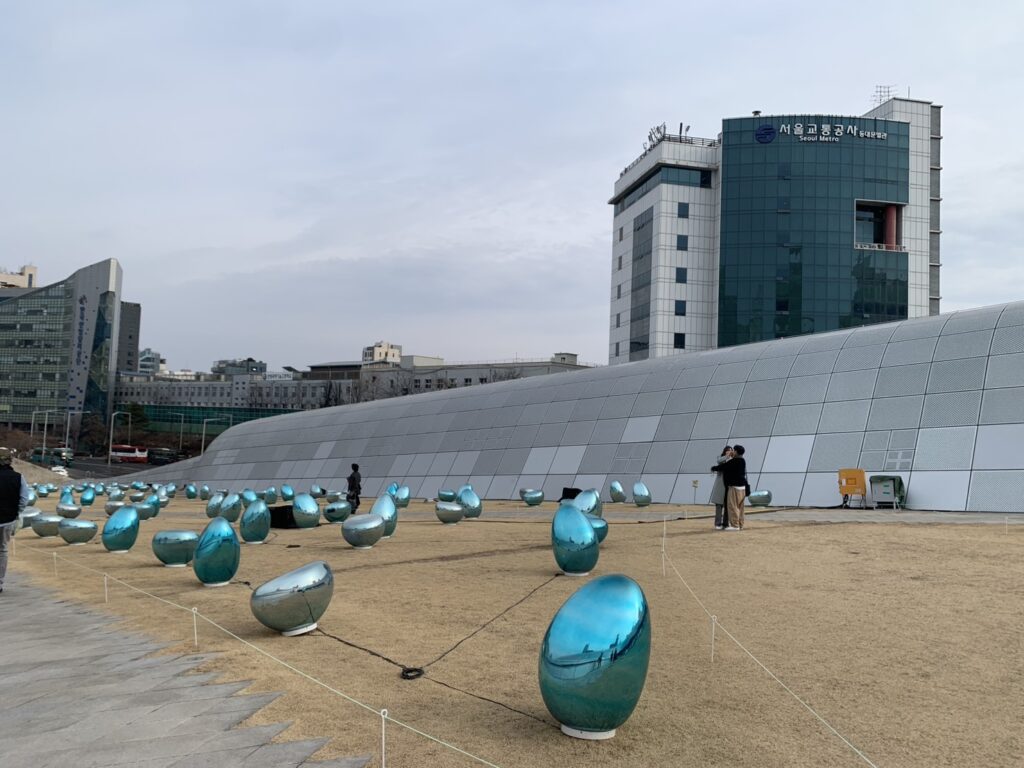
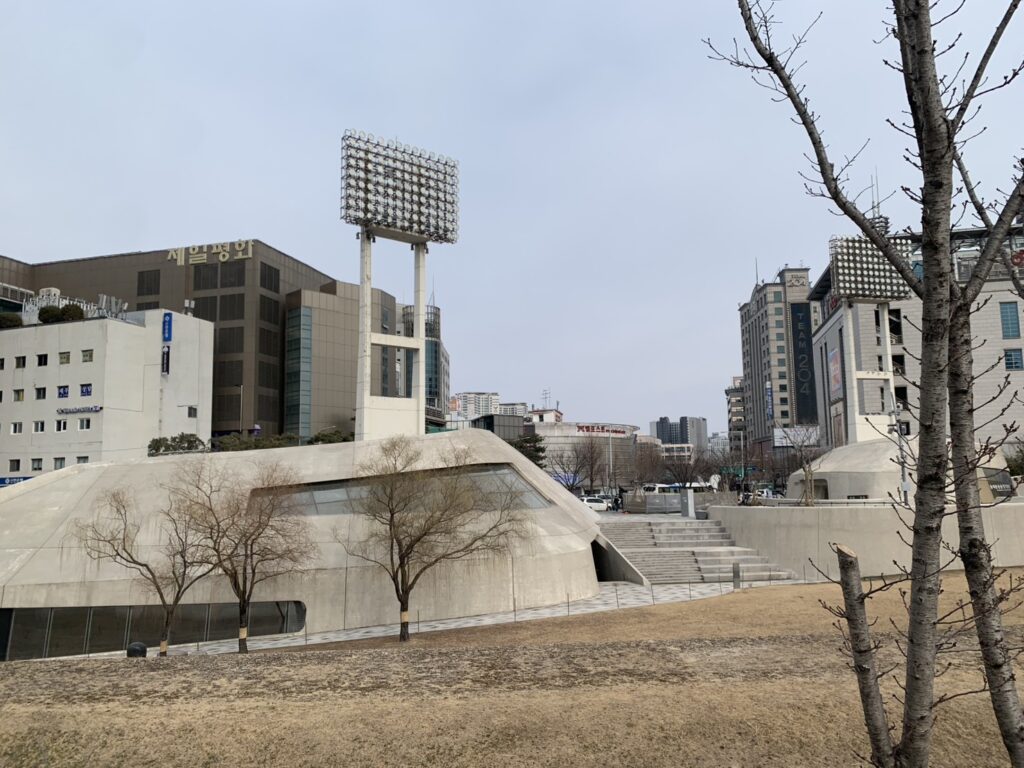
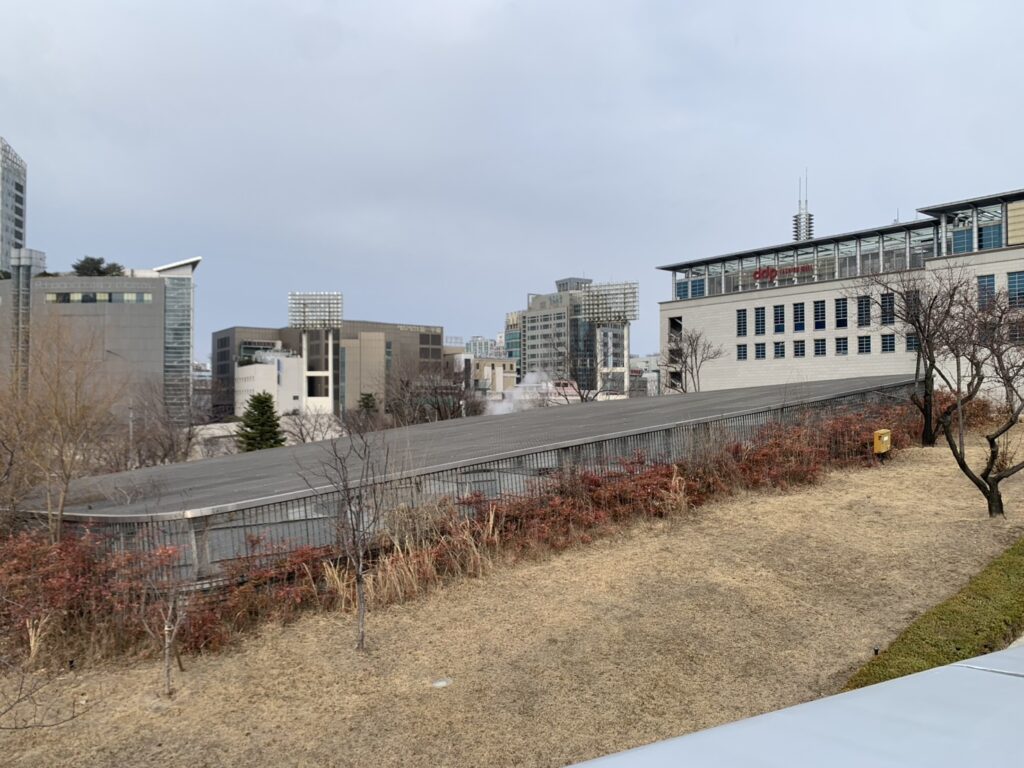
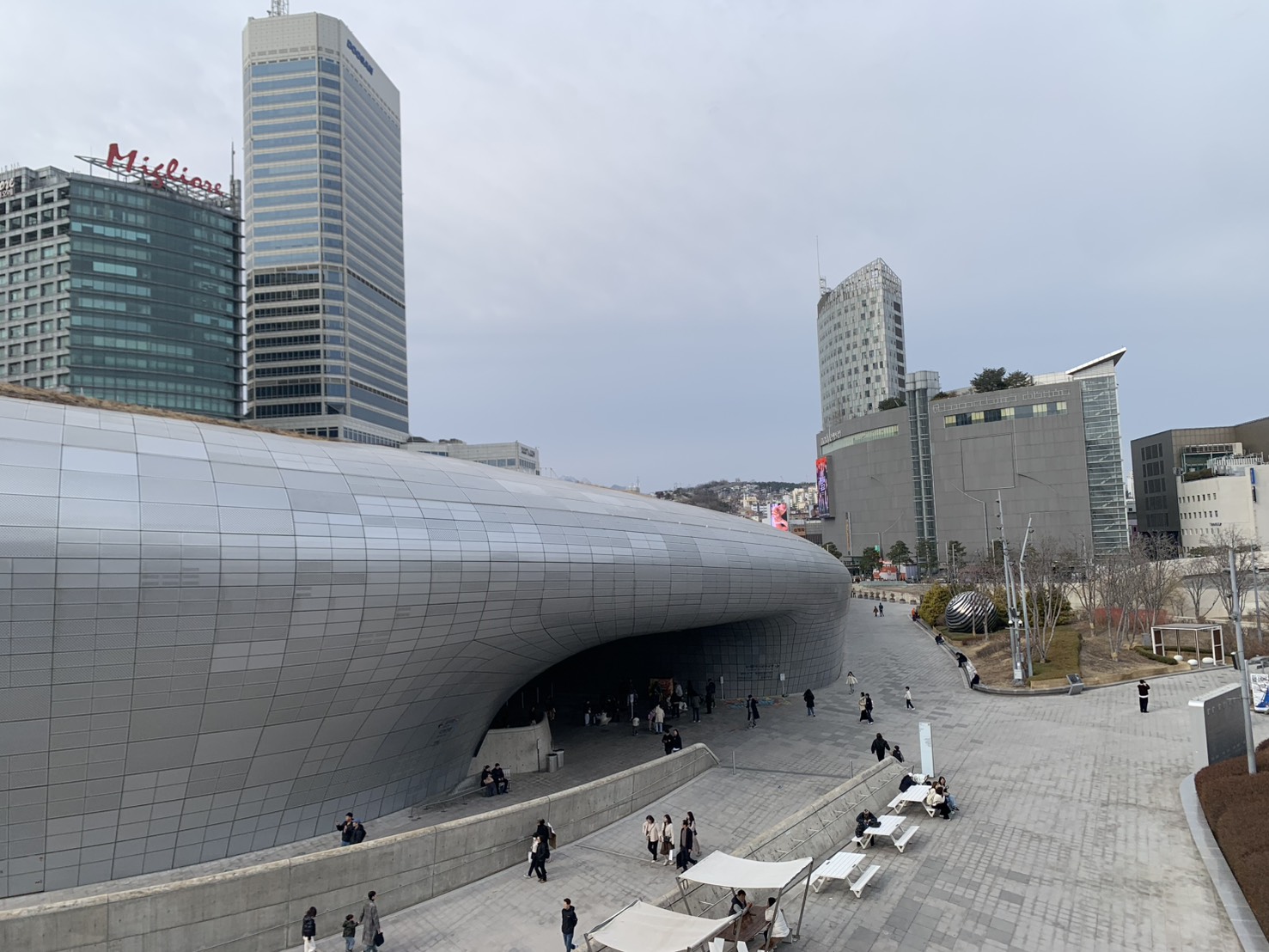
จากภาพที่เราได้ไปสัมผัสด้วยตัวเอง สิ่งแรกที่ชัดเจนมากคือ DDP ไม่ได้พยายามโชว์ตัวเองแบบตึกแลนด์มาร์กที่อยากให้คนเงยหน้ามองอย่างเดียว แต่มันเลือกจะนอนตัวต่ำ ไหลไปกับพื้น และยืดเส้นโค้งของตัวเองให้กลายเป็นส่วนหนึ่งของเมืองแทน
เส้นสายของมันไม่มีอารมณ์แข็งกระด้างแบบ monument แบบเดิม แต่เป็นความนิ่งที่ลื่นไหล เงียบ แต่มั่นใจ
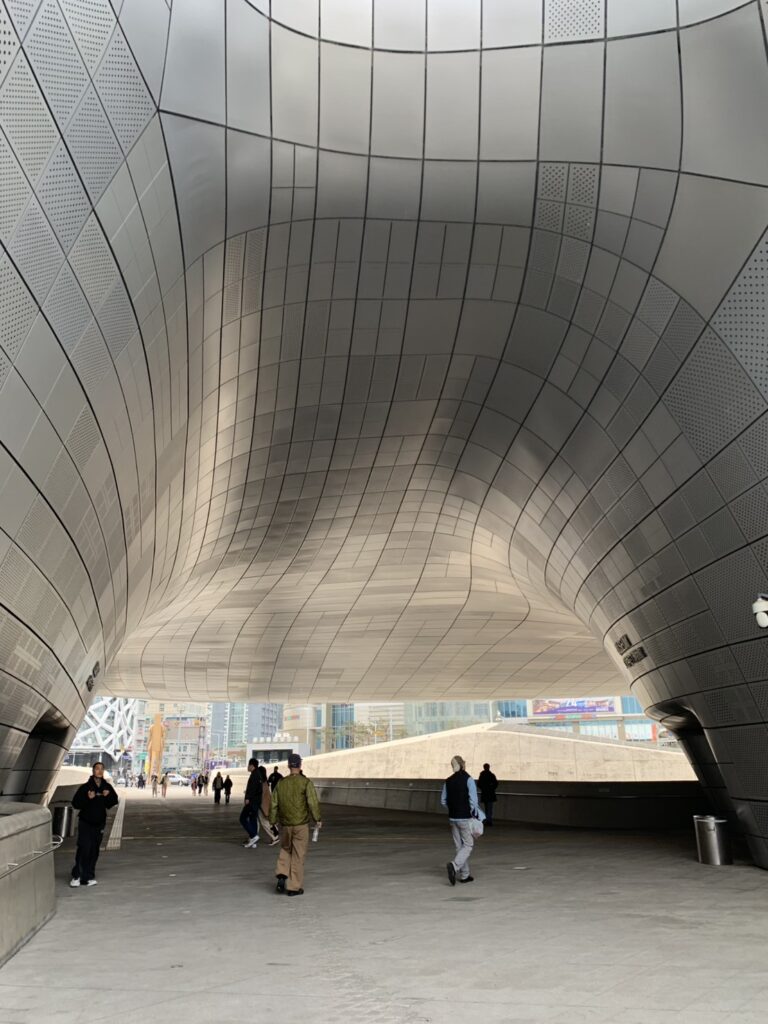
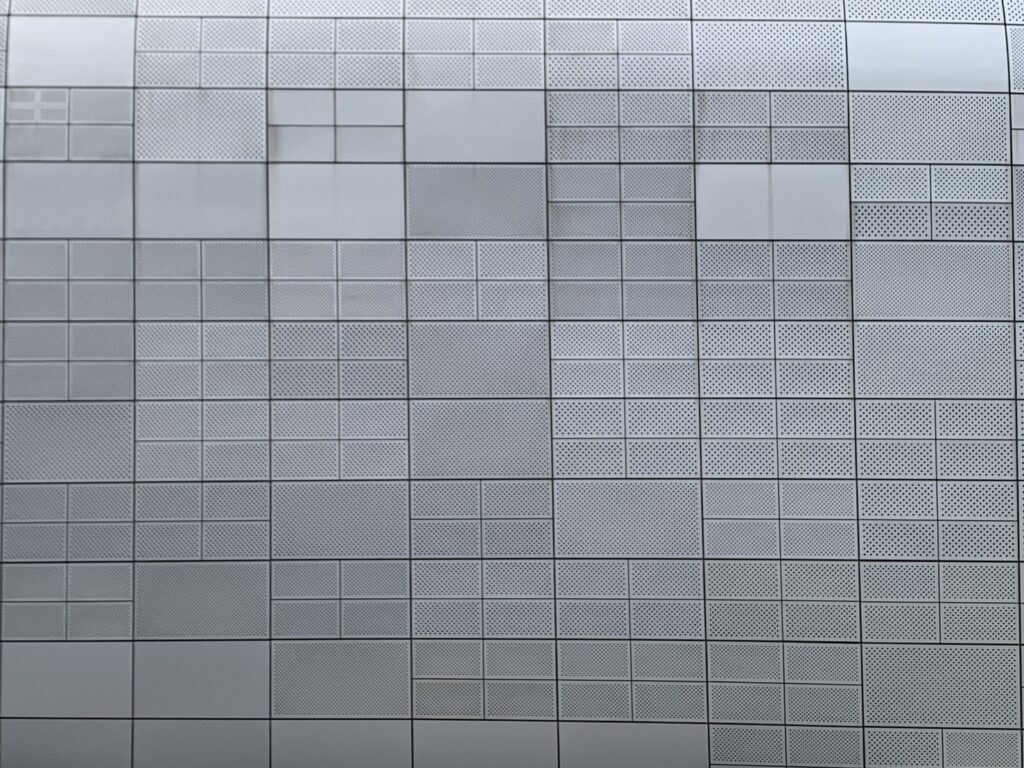
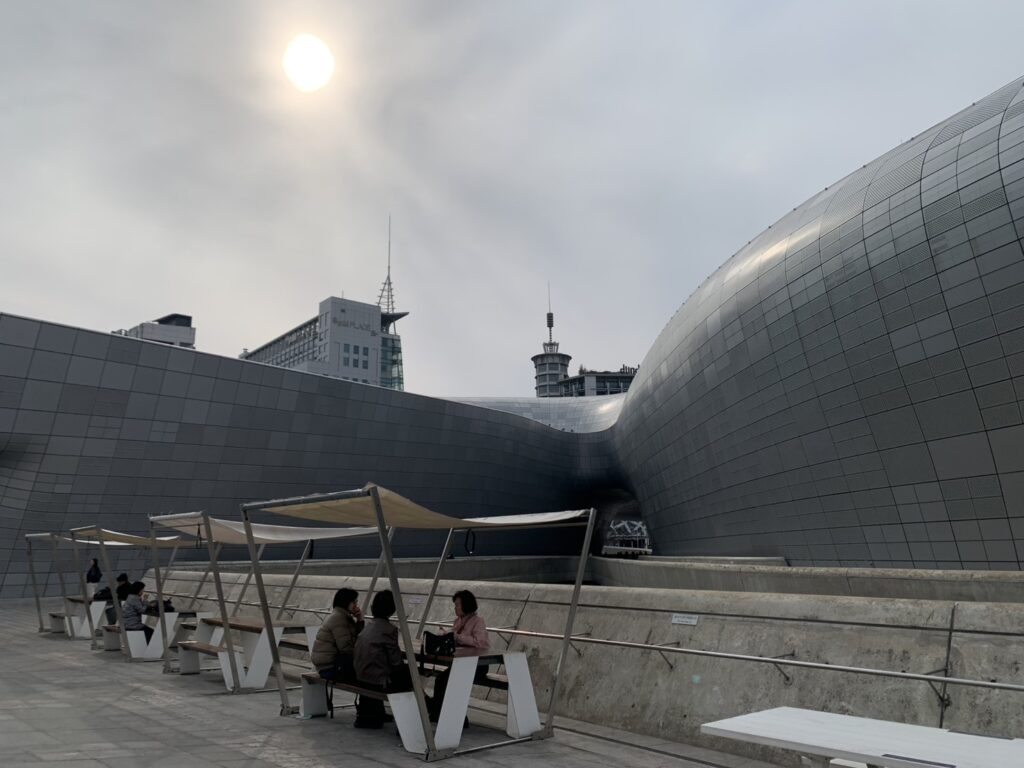
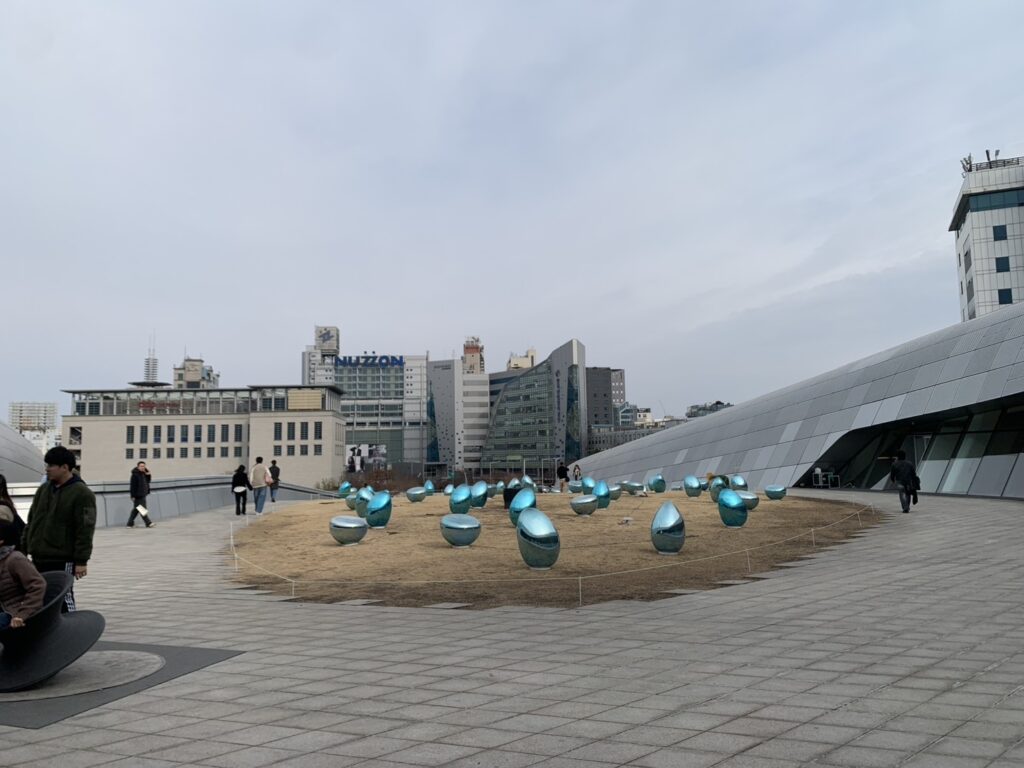
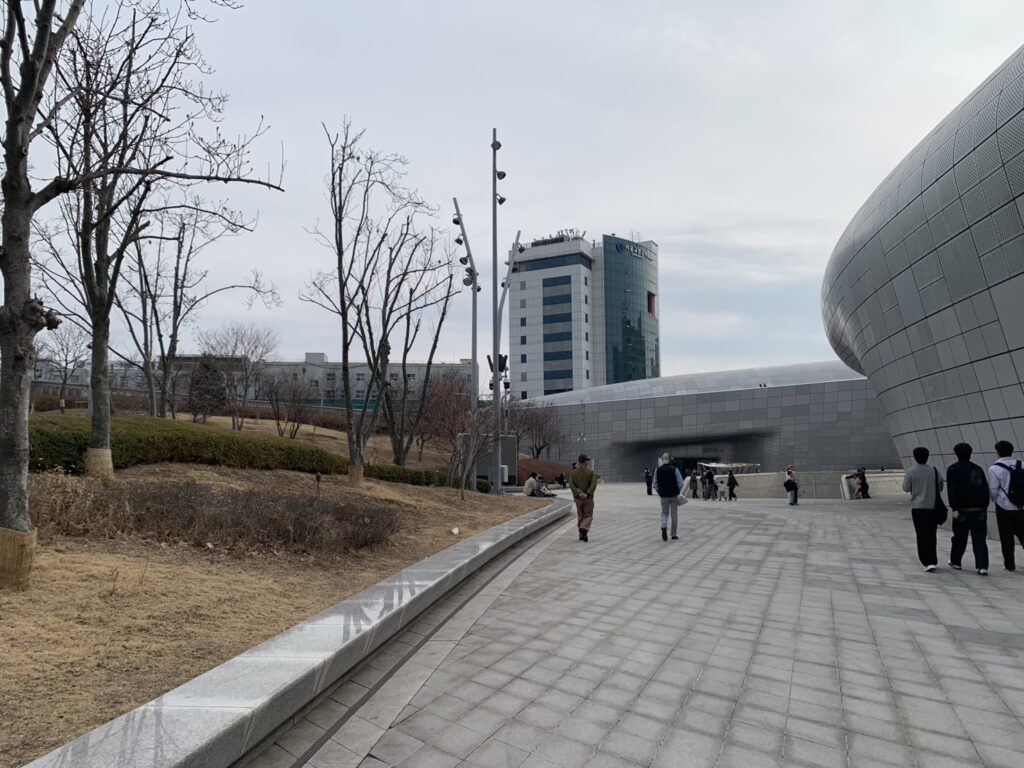
โครงสร้างสีเงินขนาดมหึมาของ DDP ยังทำหน้าที่เหมือนผิวชั้นนอกของวัตถุจากอนาคต แต่เมื่อมองใกล้ ๆ เราจะเห็นว่าความพิเศษไม่ได้อยู่แค่รูปทรง แต่อยู่ที่ระบบการผลิตทั้งหมดของมันด้วย ตัวอาคารใช้แผงอะลูมิเนียมมากกว่า 45,000 ชิ้น หลายชิ้นมีรูปทรงเฉพาะของตัวเอง และต้องอาศัยกระบวนการออกแบบดิจิทัลรวมถึง BIM เพื่อควบคุมการก่อสร้างให้เกิดขึ้นได้จริงอย่างแม่นยำ
สำหรับเรา นี่คือบทเรียนสำคัญมากของงานออกแบบร่วมสมัย
เพราะ DDP ทำให้เห็นว่า “ความสวย” ไม่ได้เกิดขึ้นจากการตกแต่งทีหลัง
แต่มาจากการที่ geometry, fabrication และ material logic ถูกคิดไปพร้อมกันตั้งแต่ต้น
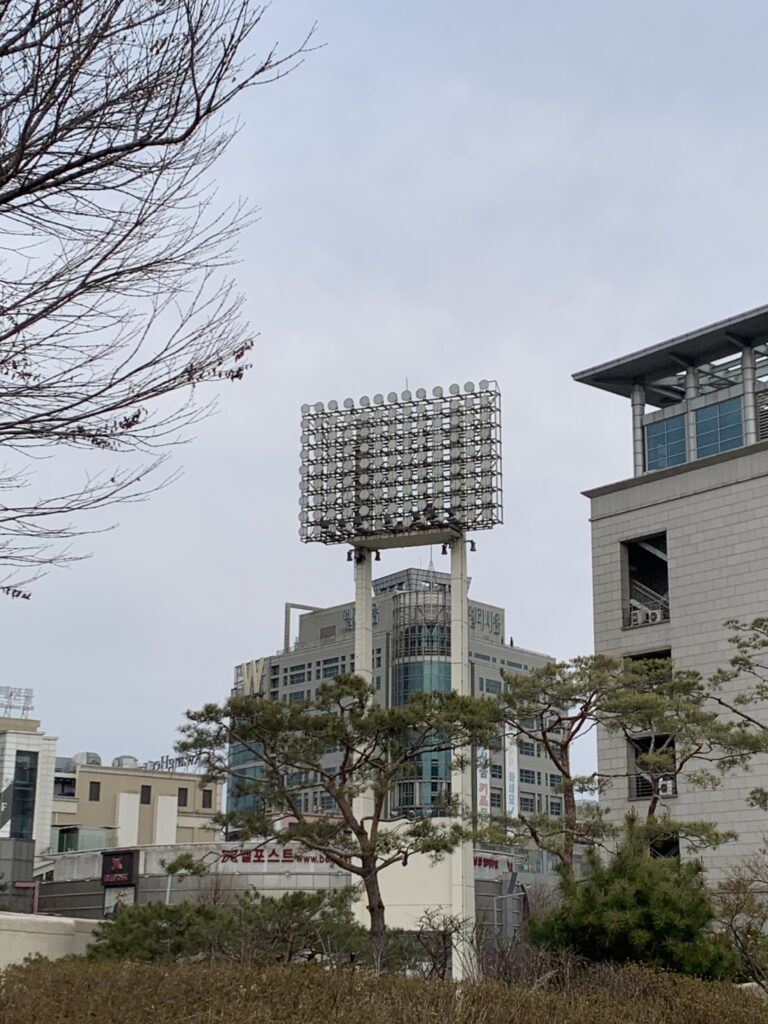
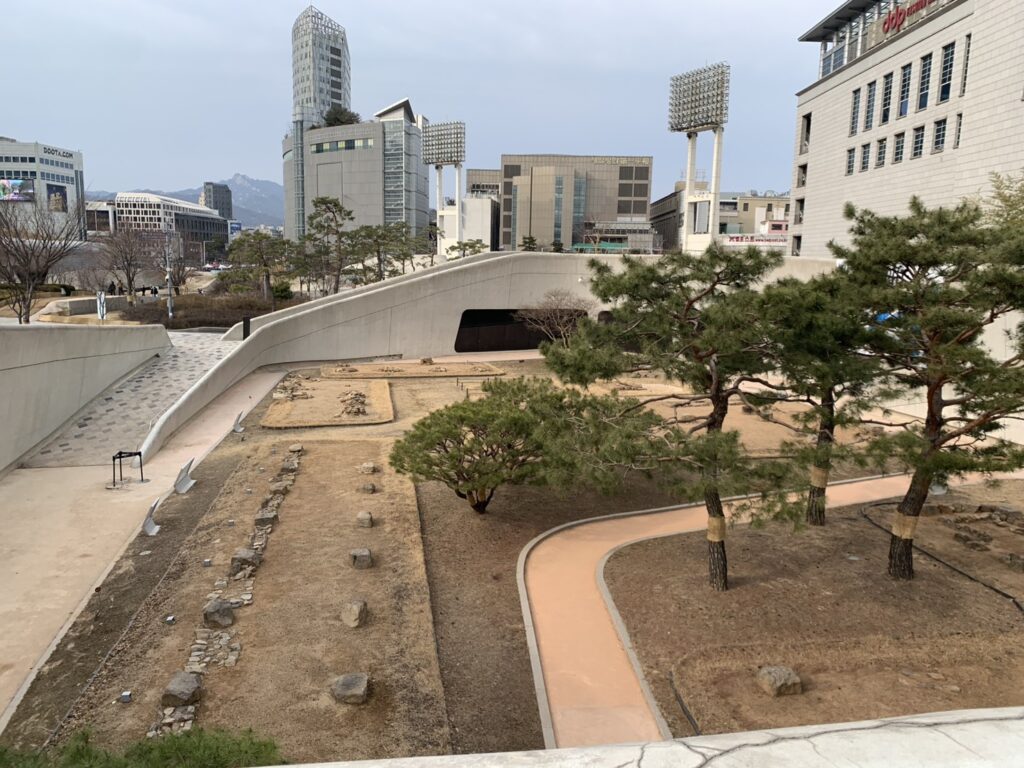
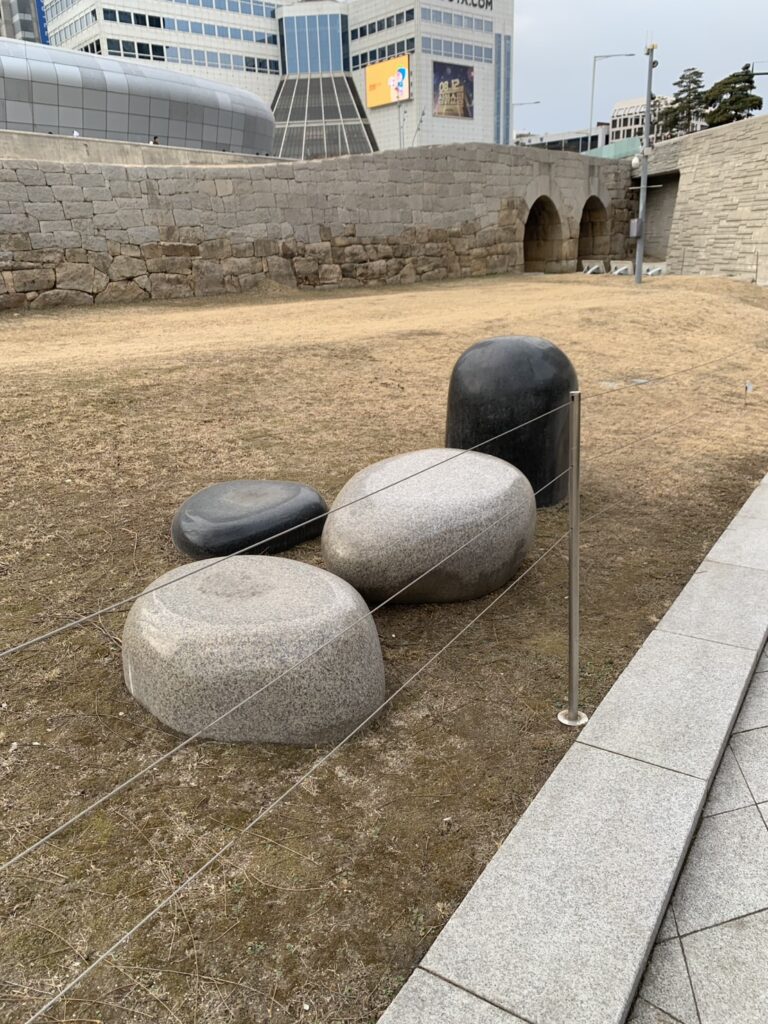
อีกสิ่งหนึ่งที่น่าสนใจมากคือ แม้ตัวอาคารจะดู futuristic อย่างชัดเจน แต่มันกลับตั้งอยู่บนพื้นที่ที่เต็มไปด้วยความทรงจำของเมือง งานศึกษาหลายชิ้นเกี่ยวกับ DDP พูดตรงกันว่าพื้นที่นี้เคยผ่านการเปลี่ยนผ่านหลายยุค ตั้งแต่แนวกำแพงเมืองเดิม มาสู่ช่วงการรื้อเปลี่ยนเมืองในยุคใหม่ และกลายเป็นสนามกีฬา ก่อนจะถูกพัฒนาใหม่เป็นศูนย์กลางด้านดีไซน์และวัฒนธรรมของโซลในปัจจุบัน
นั่นทำให้ DDP น่าสนใจกว่าการเป็นแค่ architecture icon
เพราะมันคือพื้นที่ที่ “อนาคต” ถูกสร้างขึ้นบน “ร่องรอยของอดีต”
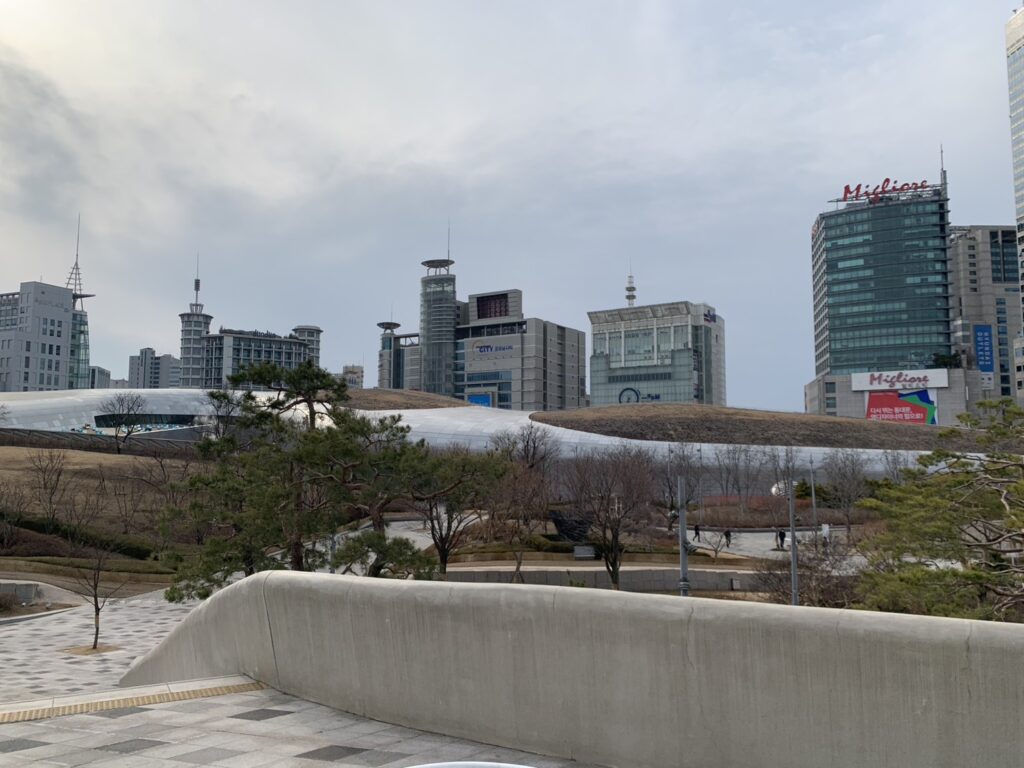
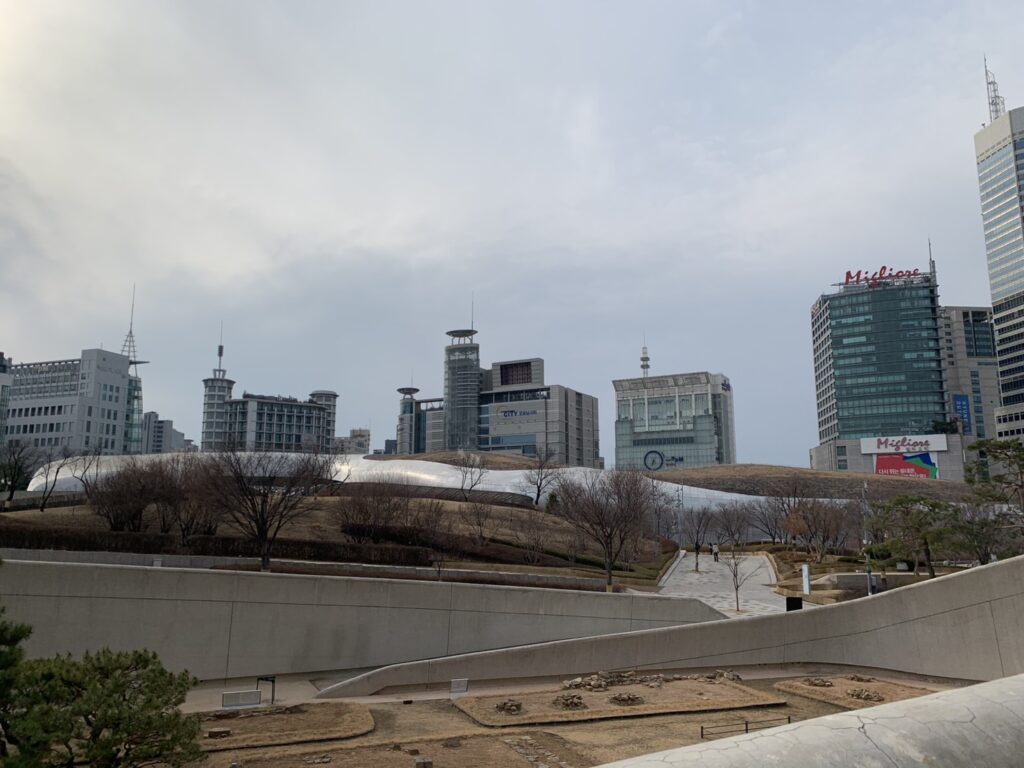
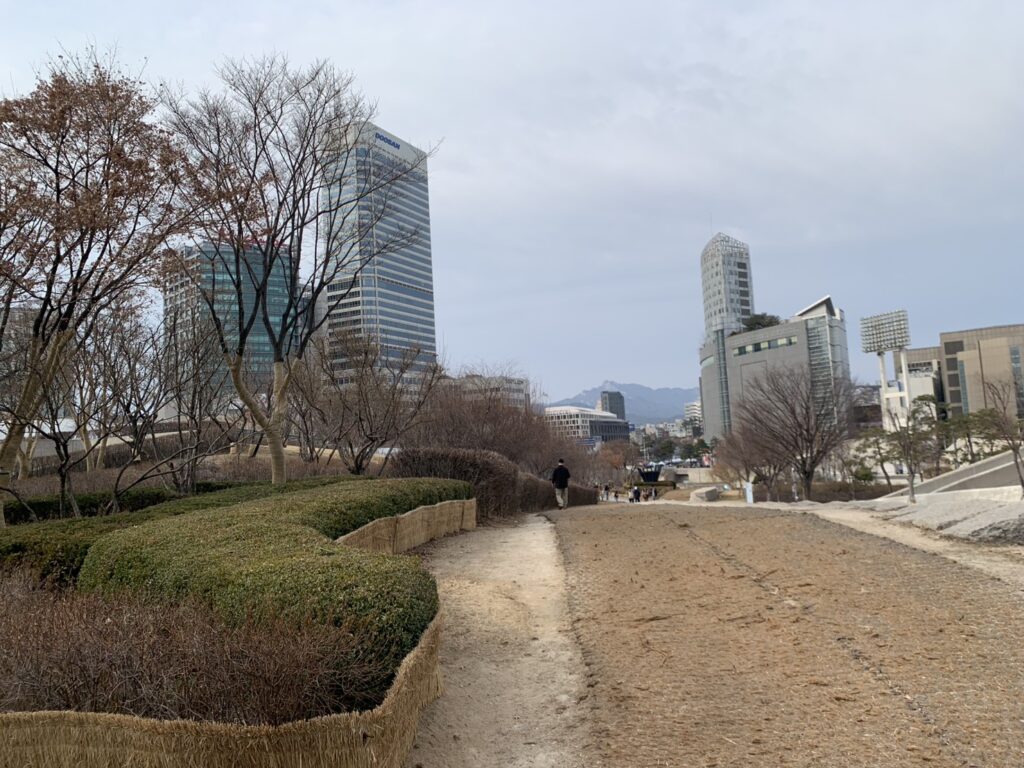
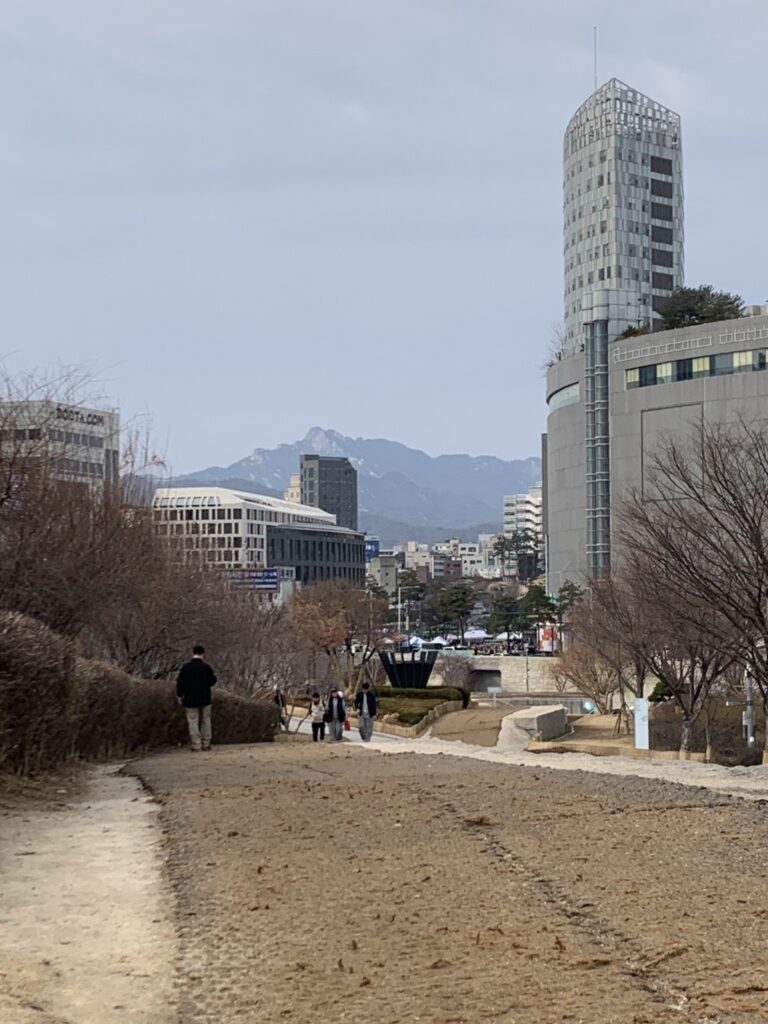
ในหลายมุมของภาพถ่าย เราจะเห็นความสัมพันธ์นี้อย่างชัดเจน
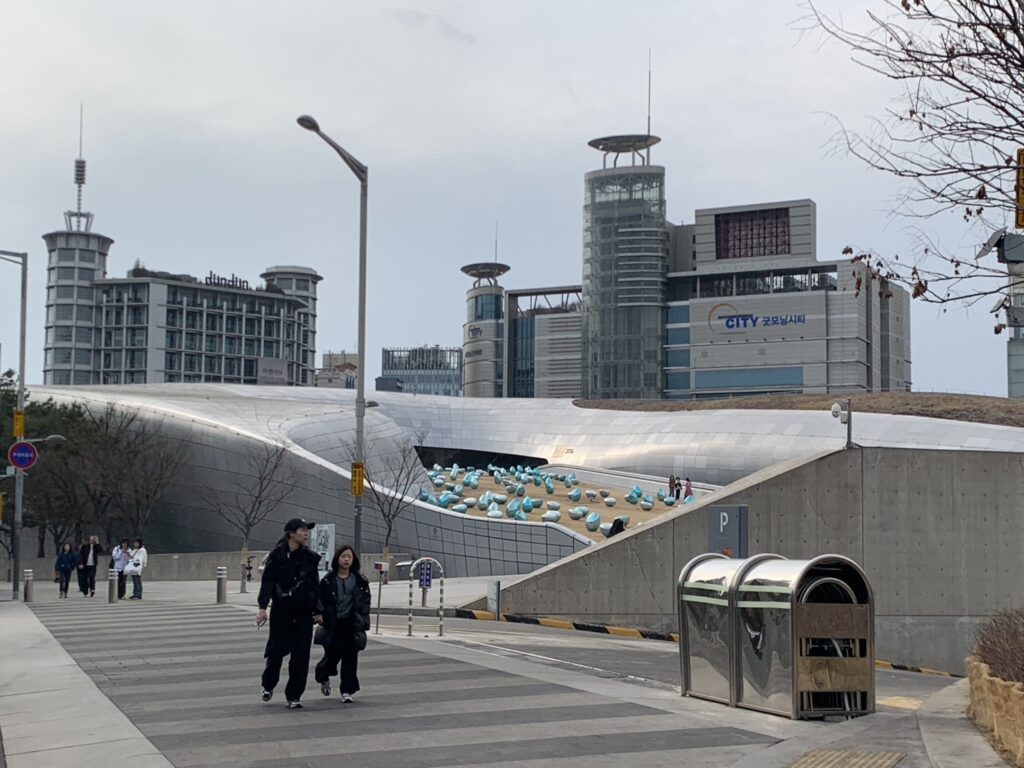
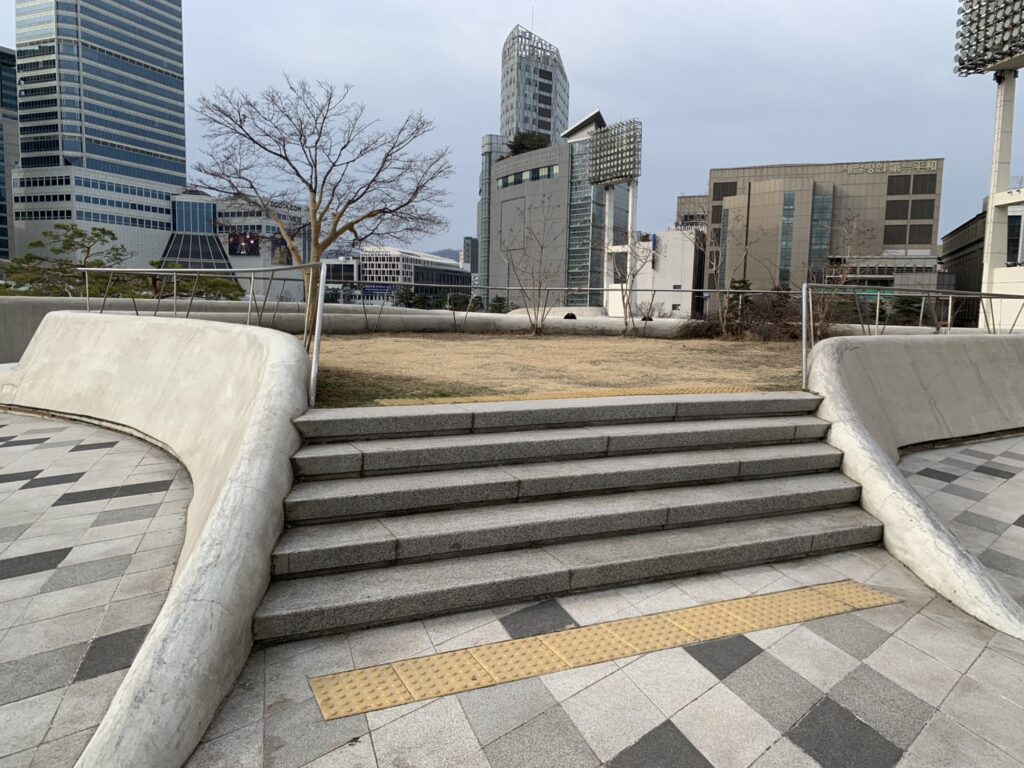
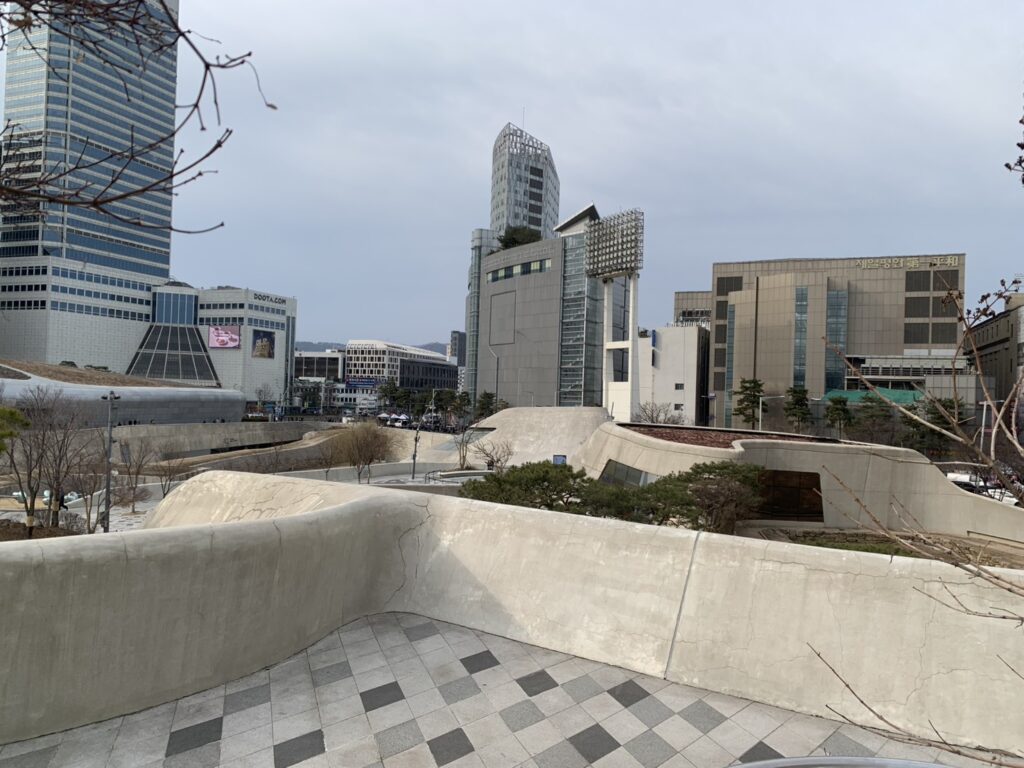
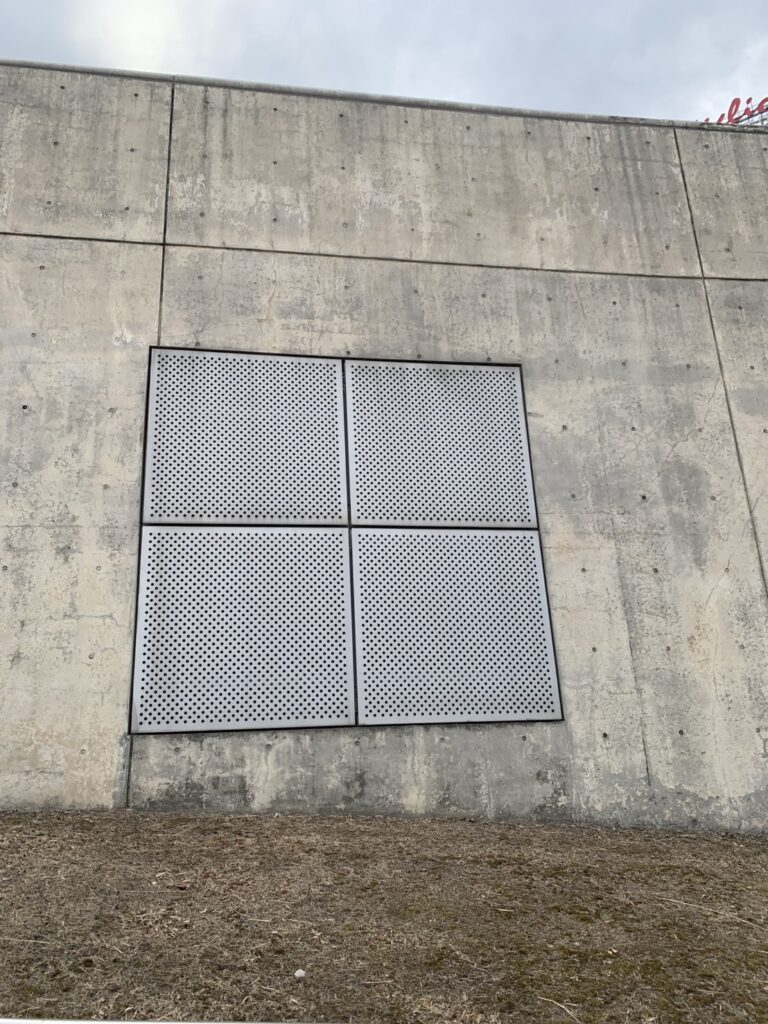
ผนังคอนกรีตโค้งเรียบตัดกับพื้นที่โบราณและเศษซากของประวัติศาสตร์
พื้นทางเดินร่วมสมัยวางตัวขนานกับภูมิทัศน์ที่ยังเก็บความเงียบของอดีตไว้
ทั้งหมดนี้ทำให้ DDP ไม่ใช่แค่งานที่ดูใหม่ แต่เป็นงานที่รู้วิธีอยู่ร่วมกับเวลา
สิ่งที่เราชอบเป็นพิเศษจากการเดินดูสถานที่จริง คือการจัดการ “จังหวะ” ของพื้นที่
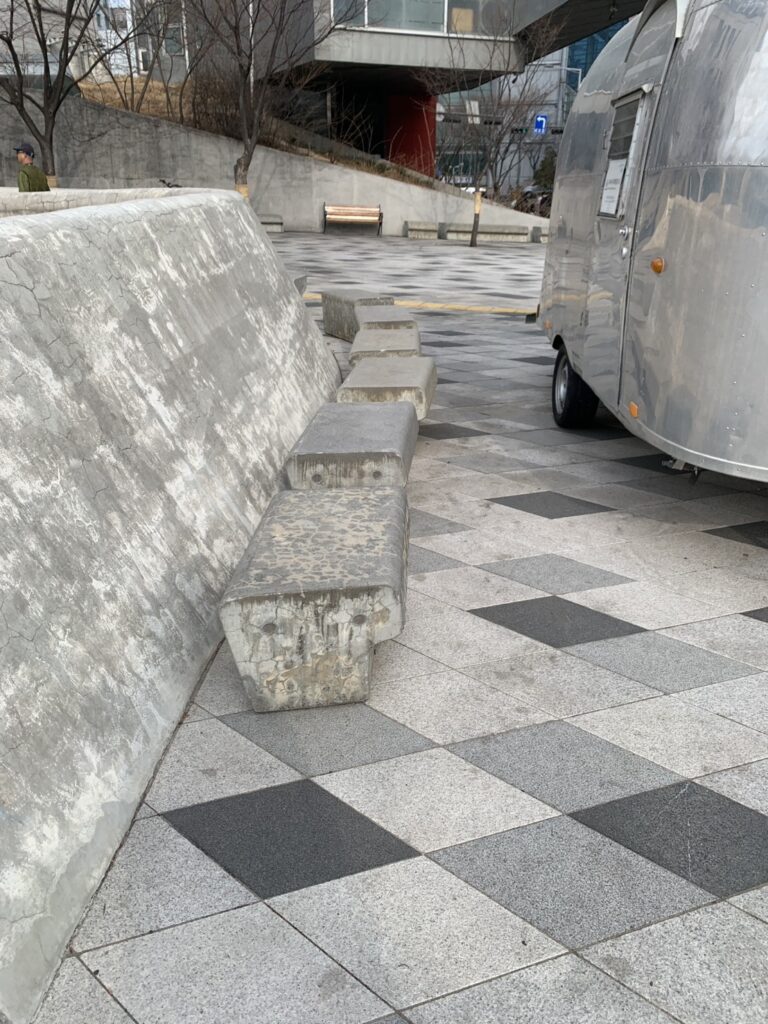
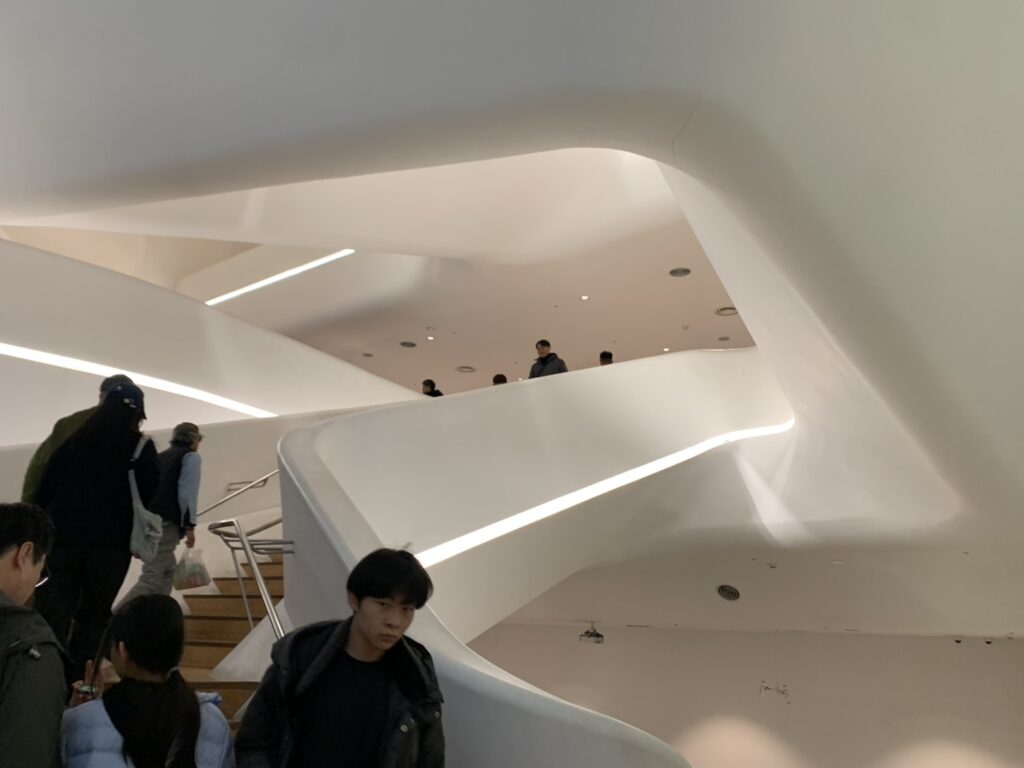
บันได ทางลาด ผนังเตี้ย ขอบนั่ง และเส้นโค้งของกำแพงไม่ได้ถูกทำขึ้นแค่เพื่อความงาม แต่คอยกำกับการเคลื่อนไหวของคนอย่างเป็นธรรมชาติ
เรามองไม่เห็นคำสั่ง
แต่ร่างกายกลับรู้เองว่าควรเดินไปทางไหน ควรชะลอตรงไหน และควรหยุดมองตรงจุดใด
นี่คือสิ่งที่สถาปัตยกรรมที่ดีทำได้
มันไม่ต้องตะโกน
แต่มันควบคุมประสบการณ์ของเราได้ทั้งหมด
สำหรับ ALBiDAY สิ่งที่ DDP มอบให้ไม่ใช่แค่แรงบันดาลใจเรื่องรูปทรงโค้งหรือผิวโลหะ
แต่คือวิธีคิดว่า วัสดุสามารถสร้างอารมณ์ของพื้นที่ได้อย่างไร
ผิวอะลูมิเนียมของ DDP ไม่ได้มีหน้าที่เพียงสะท้อนแสง แต่มันทำให้มวลขนาดใหญ่ดูเบา ดูลื่น และดูเหมือนเปลี่ยนตัวเองไปตามท้องฟ้า เวลา และมุมมองของผู้เดินผ่าน
ในอีกด้านหนึ่ง ผนังคอนกรีตและพื้นภูมิทัศน์รอบอาคารก็ให้ความรู้สึกตรงกันข้าม คือหนัก แน่น เงียบ และ grounded
เมื่อสองสิ่งนี้อยู่ร่วมกัน DDP จึงไม่ใช่แค่ “future object”
แต่เป็นพื้นที่ที่มีทั้งความลอยตัวและความนิ่งในเวลาเดียวกัน
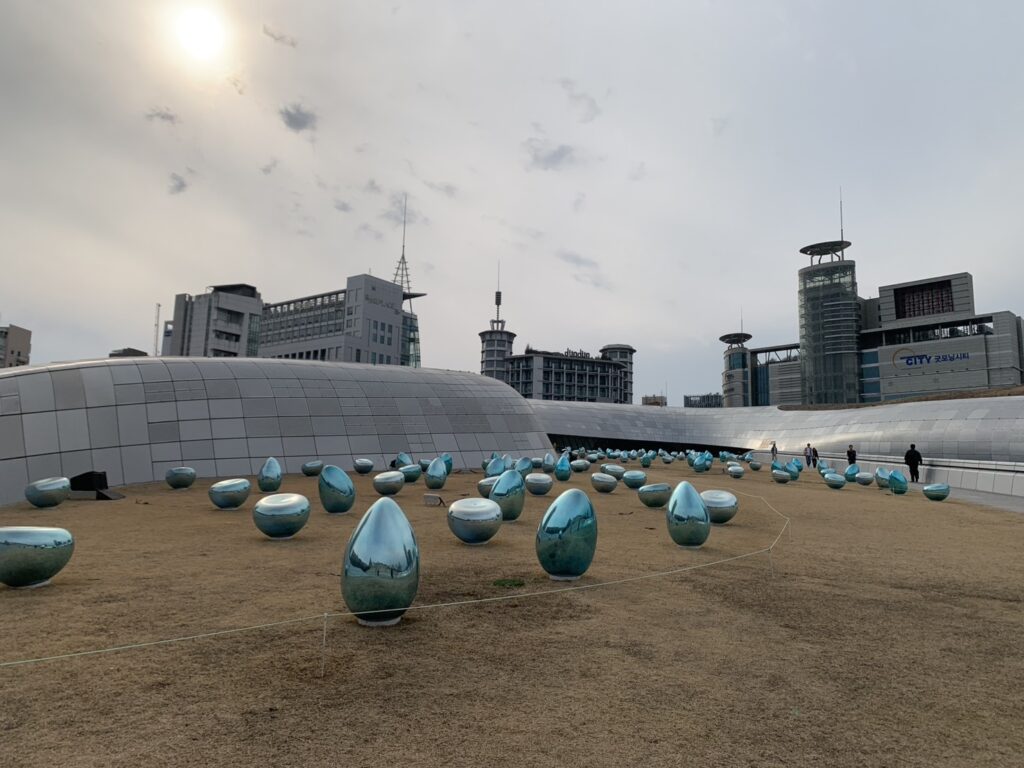
และบางที นี่อาจเป็นเหตุผลว่าทำไมอาคารนี้ยังทรงพลังแม้ในวันที่ท้องฟ้าสีเทา หญ้าแห้ง และไม่มีแสงไฟโชว์ใด ๆ
เพราะสถาปัตยกรรมที่ดีพอ จะไม่ต้องพึ่ง spectacle ตลอดเวลา
ต่อให้ไม่มี event มันก็ยังพูดอยู่
สิ่งที่เราอยากหยิบกลับมาจาก DDP จึงไม่ใช่การลอกภาษาของ Zaha Hadid
แต่คือการทบทวนว่า ในงานออกแบบของเราเอง
เราจะทำให้เส้นสาย พื้นผิว วัสดุ และการใช้งานจริง พูดภาษาเดียวกันได้อย่างไร
เพราะท้ายที่สุดแล้ว งานออกแบบที่น่าจดจำไม่จำเป็นต้องซับซ้อนที่สุด
แต่มันต้องทำให้ผู้คน “รู้สึก” ได้ว่า ทุกอย่างถูกคิดมาแล้วอย่างตั้งใจ
และนั่นคือสิ่งที่ Dongdaemun Design Plaza ยังคงทำได้อย่างสงบ งดงาม และเฉียบคม
แม้เวลาจะผ่านไปแล้วกว่าทศวรรษก็ตาม
When architecture doesn’t sit on the ground but becomes the ground itself
There are buildings that you don’t enter so much as you move through them. You climb over them, linger on them and suddenly realise that you are inside their conceptual landscape. Seoul’s Dongdaemun Design Plaza (DDP) – a project by Zaha Hadid Architects and Samoo Architects & Engineers that opened in 2014 on the former stadium site of Dongdaemun – is one such building.
Unlike typical public buildings, DDP was conceived not as an isolated object but as a landscape of movement. The architects describe the idea as a “Metonymic Landscape”: a continuous field where building, garden, plaza and circulation paths blur into one. The design reflects the energy of the Dongdaemun district, a hub of trade, fashion and culture in constant motion.
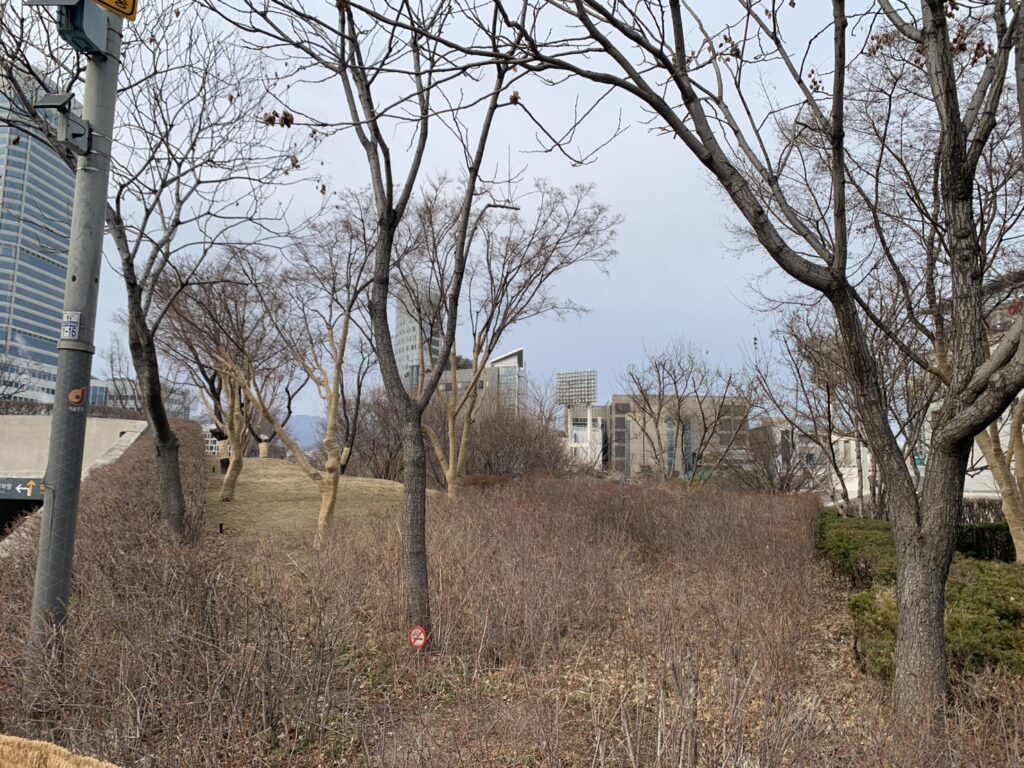
Our own photographs underscore how the project embodies quiet futurism. In winter light the dried grass, grey sky, silver cladding and curved concrete create an austere but powerful atmosphere. Rather than a showy landmark, the building hugs the ground, stretching its curved forms into slopes, ramps and seating edges that weave seamlessly into the city fabric. You rarely feel commanded to look up; instead the architecture guides your body gently, inviting you to explore.
DDP is also a case study in material intelligence. Its sinuous shell is clad in over 45,000 aluminium panels – roughly 14,000 flat pieces and 31,000 curved ones – each unique in size and curvature. The skin could only be realised through advanced digital design and BIM workflows. This integration of geometry, fabrication and material logic is what gives the building its effortless beauty; the surface isn’t decoration applied after the fact but the result of computational design working hand‑in‑hand with manufacturing.
Another layer of meaning lies beneath the surface. The site has been many things: part of Seoul’s historic city wall, a sports stadium and now a cultural hub. Excavations during construction revealed archaeological remains. As you walk past the gently sloping concrete walls and discover fragments of the old grounds, you sense how future architecture is literally built over traces of the past. DDP is more than a futuristic object; it is a place where different eras coexist.
We were particularly struck by the rhythm of movement choreographed by the design. Steps, ramps, low walls and curved surfaces aren’t ornamental; they calibrate your pace and viewpoint. You instinctively know where to slow down, where to turn and where to pause. Good architecture doesn’t need to shout – it orchestrates experience quietly.
For ALBiDAY, the lesson of DDP isn’t simply about adopting fluid forms or metallic skins. It’s about understanding how materials create the mood of space. The aluminium panels give the vast volumes a light, almost weightless presence, reflecting sky and light differently through the day. In contrast, the concrete walls and ground feel heavy, grounded and serene. Together they generate a tension between levity and solidity that keeps the space compelling even on a grey, eventless day. Great design should speak through its materiality and proportions, not rely on spectacles.
Rather than imitate Zaha Hadid’s language, our take‑away is to ask: How can we make line, surface, material and use speak the same language in our own work? Memorable projects aren’t necessarily the most complicated; they are those where every element has been thought through so that people feel the intent when they move through them. DDP shows that when geometry, fabrication and material are aligned with experience, architecture can remain quietly powerful even decades later.